
Research
I have always understood academic inquiry as a form of lived practice.
Investigation that does not ultimately bear on how we understand ourselves and how we live has not yet arrived at its destination. This conviction has governed every project I have undertaken — and it aligns me, I think, with the ancient Greek philosophers for whom philosophy was inseparable from self-knowledge and a demonstrable expression in one's way of being.
Four bodies of formal work have emerged from this orientation, each one driven by the same underlying question: what does it mean to be a human being, and what remains of that meaning in a world increasingly shaped by machines that simulate our capacities?
The Absurd and the Nonhuman — Master's Research
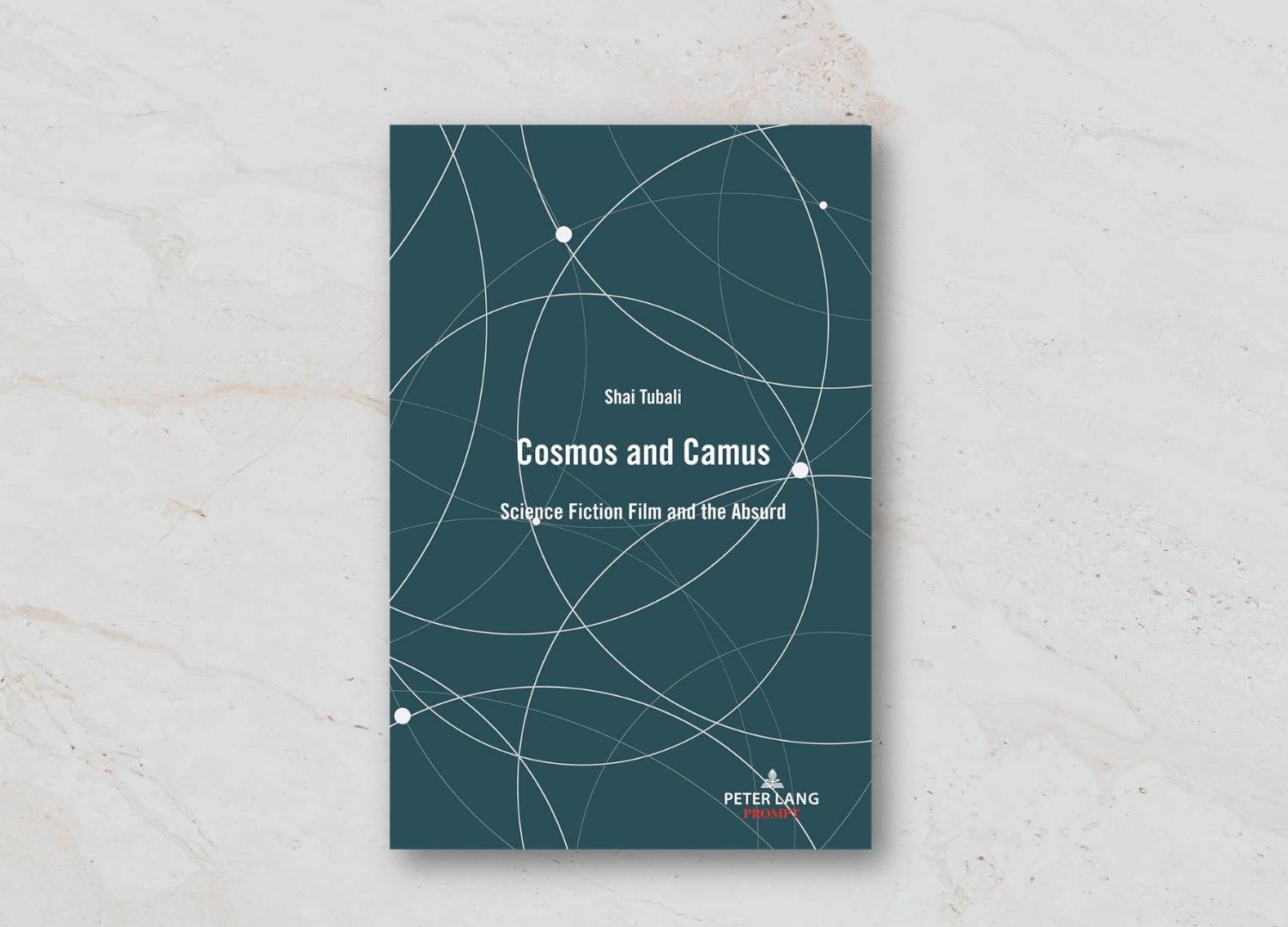
Cosmos and Camus: Science Fiction Film and the Absurd
What do science fiction films reveal about the human condition when they place us in encounter with imagined nonhumans? Through close readings of Contact, Arrival, A.I., and Her, I argued that imaginative collisions with conscious nonhumans mirror the human condition back to us with unusual clarity — raising the question of whether absurdity is exclusively a human matter, and what precisely it is about human consciousness that makes it capable of the kind of meaning-seeking that no machine has yet demonstrated.
At the time of writing, generative AI was still absent from public life. The nonhumans I was studying were imagined. That would soon change.
Dialogue as Transformation — Doctoral Research
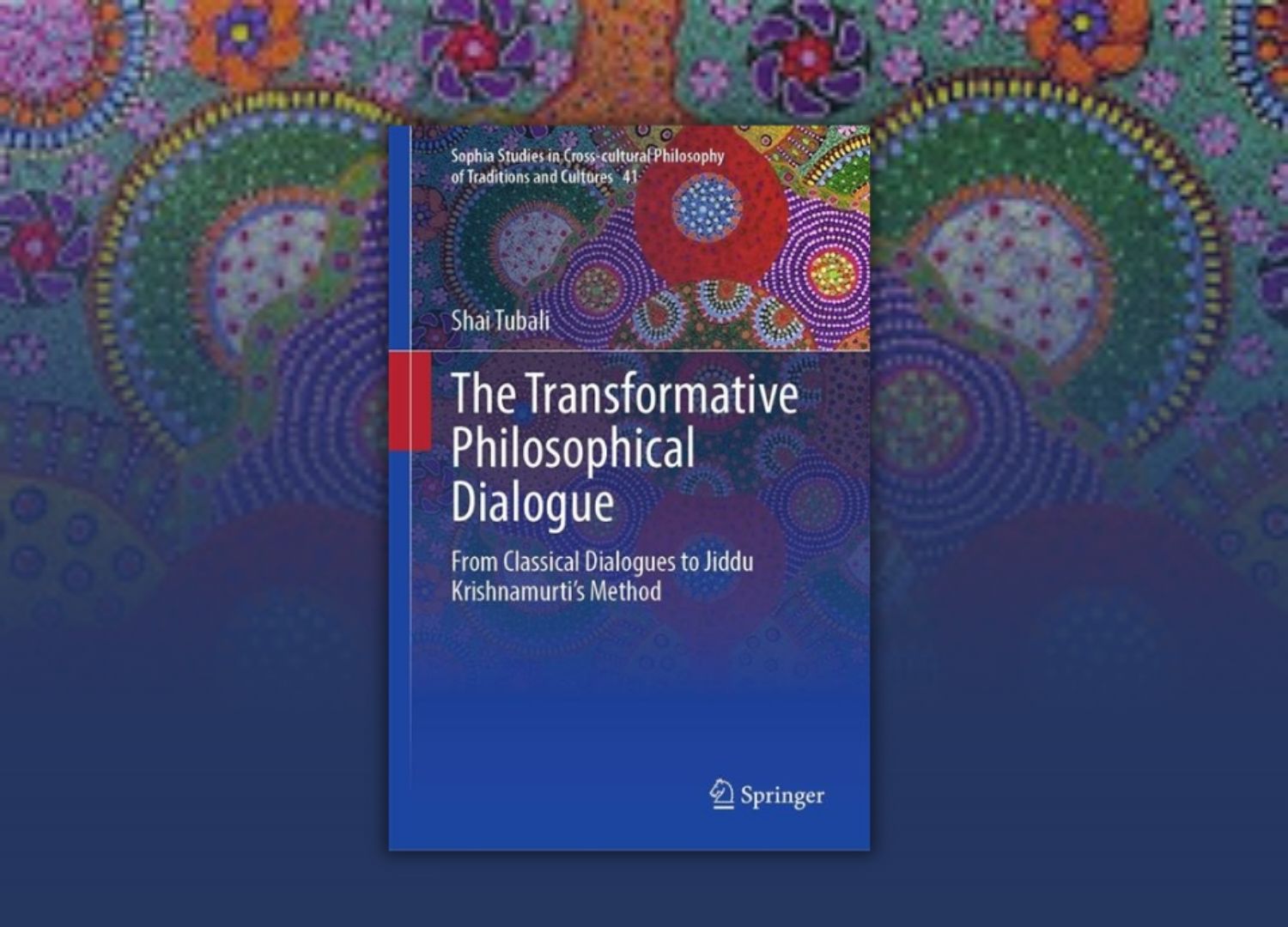
The Transformative Philosophical Dialogue: From Classical Dialogues to Jiddu Krishnamurti's Method
Can philosophical dialogue actually transform the people engaged in it, rather than merely informing them? My doctoral research at the University of Leeds centred on Jiddu Krishnamurti's dialogues — arguing that beneath his apparent rejection of systems lies an identifiable method: a practice of question-and-negation designed to empty the mind of accumulated knowledge and open it toward direct perception.
Placing this within the longer history of transformative dialogue — Plato's Socratic dialogues, the guru-disciple conversations of the Hindu Upanishads — I demonstrated that philosophy's origins were practical rather than theoretical: dialogues written to reorient the interlocutor's way of life. The thesis was awarded a Doctor of Philosophy in philosophy of religion and published as a peer-reviewed monograph by Springer Nature.
The Machine as Mirror — Postdoctoral Research
Will Humans Ever Become Conscious? Jiddu Krishnamurti's Thought about AI as a Fresh Perspective on Current Debates
My postdoctoral year at the Arts and Humanities Research Institute at Leeds introduced Krishnamurti's perspective on AI into the philosophy of artificial intelligence. His argument — largely overlooked in current discourse — is that our primary concern should not be machines attaining humanlike minds, but people having machinelike minds. An insufficiently cultivated mind would be perfectly imitable. The challenge AI poses is not external but internal.
This reframing inverts the standard question: not whether machines will ever become conscious, but whether humans will ever become sufficiently conscious to transcend the simulated intelligence both within them and in the mirror-like reflection of the machine. That question became the foundation of my current research. The paper is available open access via Springer.
The Atlas of Human Capacities — Current Doctoral Research
UCL Institute of Education, University College London
I enrolled in a second doctorate at the UCL Institute of Education — ranked first in the world in its field — because I understood that philosophy alone was insufficient to respond adequately to this moment. The research is developing an atlas of human capacities: a rigorous mapping of what distinguishes human experience from computational simulation, and what education must now deliberately cultivate. The guiding question is Krishnamurti's, extended into education: If the machine can take over everything man can do, and do it still better than us, then what is a human being?
The methodology is Design-Based Research — a deliberate choice. The atlas is being built in dialogue with teachers and students across multiple school sites, introduced as a provisional resource explicitly open to confirmation, revision, or rejection through practice. Teacher workshops, student inquiry circles, classroom enactment, and ethnographic observation all feed back into the atlas as it develops across iterative cycles.
This is philosophy made accountable to experience. Which is, in the end, the only kind of philosophy I have ever been interested in doing.
Public Research in Dialogue
Alongside the formal work, I write a yearlong series for Big Think exploring the atlas of human capacities through conversations with leading thinkers — among them Anil Seth, Christof Koch, Iain McGilchrist, Luciano Floridi, and Federico Faggin. I understand this as research in dialogue form: ideas tested in contact with some of the sharpest minds currently engaged with questions of consciousness, intelligence, and what it means to be human.
The full series is
Selected Publications
Cosmos and Camus
The Transformative Philosophical Dialogue
Will Humans Ever Become Conscious?
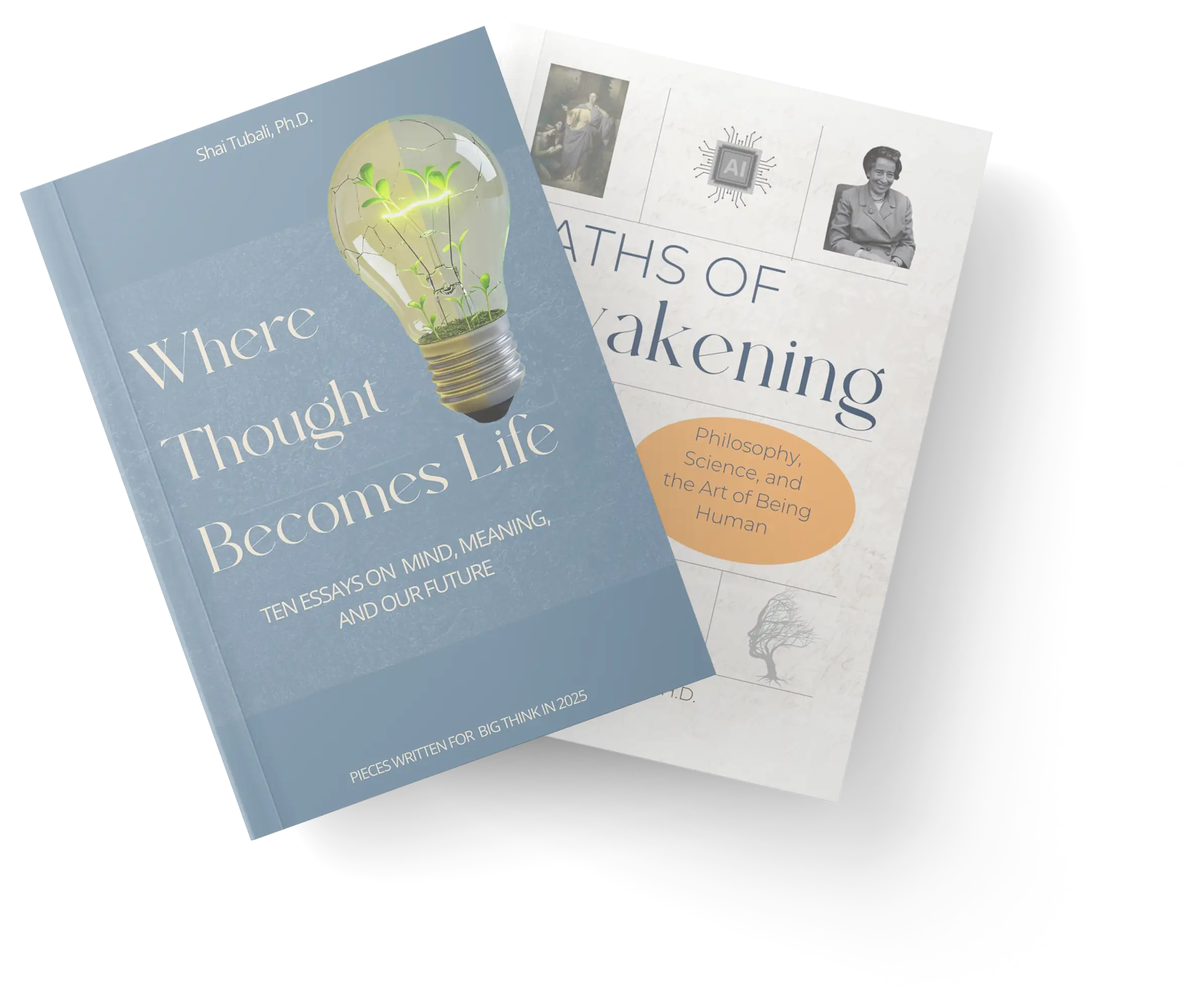
Meaning and depth in an artificial age
A twice-monthly letter on philosophy, consciousness, AI, education, and the practices through which human capacities are cultivated.
New essays, selected readings, and occasional invitations to live work.