
About
The question that has occupied me longest is also the one most consistently avoided.
What does it actually mean to be a human being? Not in the biological sense. In the full sense — the one that keeps you awake, that surfaces at the edge of significant experiences, that philosophy has circled for centuries without fully landing on.
I have been living inside this question for thirty years. It has taken me through five distinct phases of a life I did not plan but recognise, in retrospect, as coherent.
I began as a writer.
By sixteen I was working as a journalist — interviewing, broadcasting, editing. By eighteen I had published a book of short stories that won a Ministry of Culture award. The novel seemed like the natural form for the question I was carrying: fiction as a way of holding what argument cannot quite reach. I assumed this would be my life.
At twenty-one, something interrupted that assumption entirely. Not a decision — an experience. Two years of sustained philosophical and contemplative inquiry into the question who am I? led to a direct encounter with what I can only describe as a consciousness that precedes and exceeds the personal self. It was a reorganisation of my understanding of what is most real. I have spent nearly thirty years attempting to think rigorously about what that encounter revealed. It has not left me since. And it made the novel, suddenly, feel insufficient.
What followed was a period I entered with genuine uncertainty.
I became a writer and speaker in the field of self-transformation — which was the most available description of what I was doing. I wrote. I spoke. And at a certain point, quite reluctantly, I agreed to serve as the guide of a small group of people seeking the same kind of direct encounter with consciousness that had reorganised me.
That lasted two and a half years. It was highly experimental. And it taught me something I did not expect: I was not suited to that role. Not temperamentally, not philosophically. What I discovered — through the experience rather than against it — was something broader than a personal limitation. The model itself was the problem. The age of the guru, in which a single person serves as the conduit of grace and the source of guidance for others, had passed. What is actually required — what consciousness itself requires of the people who take it seriously — is the discovery of one's own inner sovereignty. Not a teacher to follow but a capacity to cultivate.
I dispersed the group. I have not returned to that model since. And the recognition it produced has shaped everything that followed: that the work is not about transmission from one person to another, but about creating the conditions in which people encounter their own depth directly. That recognition has never left me. Everything I have built since — the methods, the research, the school — has been an attempt to honour it.
What consciousness itself requires of the people who take it seriously — is the discovery of one's own inner sovereignty.Not a teacher to follow but a capacity to cultivate.
The third phase of my adult life was devoted to method.
If consciousness is what I understood it to be, then it should be accessible — not as grace or accident, but through practice, through structured inquiry, through deliberate cultivation. Between my early thirties and my early forties I devoted myself almost entirely to developing those structures.
The Expansion Method — now practiced by many thousands, including physicians, psychologists, and researchers — emerged from this period, as did a body of work mapping the subtle dimensions of human experience: the chakra system reframed as centres of psychological perception and evolution, an anatomy of the psyche, an investigation of heart intelligence and how it can be recovered. I wrote thirteen books during this period, translated into thirteen languages, attempting to make these systems available to anyone serious enough to engage with them.
This work was tested. A pilot study conducted by the Charité — the largest university hospital in Europe — examined its effects. One of its techniques is currently under randomised controlled trial at the University of Sussex. I mention this not to claim more than the evidence supports, but because rigour matters to me, and because the question of what consciousness actually is deserves to be held to the same standard as any other serious inquiry.
Even so, something was missing.
At forty, without a first degree, I applied to the University of Leeds.
The philosophy department accepted me — on the basis of my published work alone — into a research programme. What followed was nearly a decade of formal academic inquiry I had been deferring since the age of twenty-one, when I had abandoned university after half a year out of impatience with its distance from lived experience.
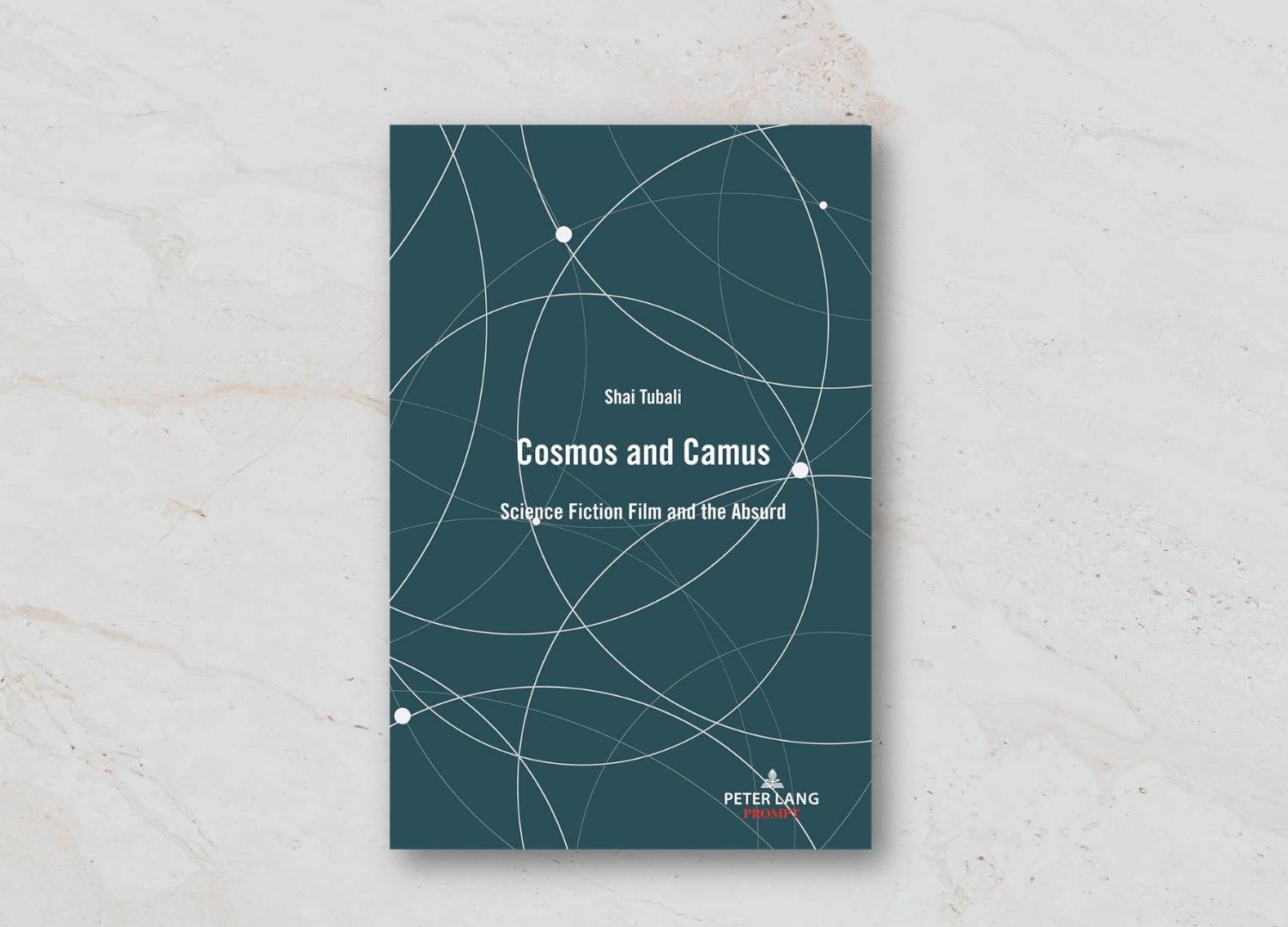
My master's research produced a monograph — Cosmos and Camus — that read science fiction film through the lens of absurdism, using human encounters with the nonhuman as a mirror for the question of what it means to be human. My doctoral research, awarded with a PhD in philosophy of religion, examined the transformative dialogues of Jiddu Krishnamurti within the broader history of philosophical dialogue in ancient Greece and India. That research became a second monograph, The Transformative Philosophical Dialogue, published by Springer Nature in 2023.
Immediately after completing the doctorate, I spent a postdoctoral year at the Arts and Humanities Research Institute at Leeds, working formally at the intersection of AI and human consciousness. It was during this year that what had been a philosophical intuition became an intellectual conviction: that the emergence of simulated cognition was not a technological event but a philosophical one — forcing a confrontation with questions about human consciousness, intelligence, and meaning that could no longer be deferred.
The argument at the heart of my doctoral thesis remained with me through all of this: academic philosophy has largely abandoned lived experience. Philosophy as a way of life — as a form of cultivation rather than merely analysis — is its missing dimension. This is why I have never felt entirely at home in the academic world, just as I have never felt entirely at home in mystical or spiritual circles. The question I am carrying does not fit comfortably in either house.
Academic philosophy has largely abandoned lived experience. Philosophy as a way of life — as a form of cultivation rather than merely analysis — is its missing dimension.
Then, in 2022, the question became everyone's question.
The emergence of generative AI did something philosophically significant that I do not think has yet been fully recognised: it threw us back on ourselves. By asking whether AI is intelligent, whether AI could be conscious, whether AI can create or understand or feel — we are being forced, for the first time at civilisational scale, to ask what human intelligence actually is. What human consciousness actually is. What makes a mind irreplaceably, non-mechanically alive.
This is not a crisis, but an invitation — the most important philosophical invitation of our era. But only if we respond to it with the seriousness it deserves.
This is not a crisis, but an invitation — the most important philosophical invitation of our era. But only if we respond to it with the seriousness it deserves.
I am now in my first year of doctoral research at the UCL Institute of Education — ranked first in the world in its field — in AI and Education. My research is developing what I call an atlas of human capacities: a rigorous, comprehensive mapping of the capacities that distinguish human experience from computational simulation, and that education must now deliberately cultivate if we are to live meaningfully rather than mechanically in the decades ahead. This is not an alarmist position, but a normative one. Instead of fearing AI, we need to understand ourselves more deeply than we have ever been required to until now.
This research has taken me beyond the university walls. I write a yearlong series for Big Think exploring these capacities through conversations with leading thinkers — Anil Seth, Christof Koch, Iain McGilchrist, Luciano Floridi, Federico Faggin among them. And I have established the Essence of Humanity Foundation, dedicated to reorienting education toward the cultivation of irreplaceable human capacities.
I feel, at this particular moment, that the work has only just begun. For this purpose I lead a highly disciplined life, steeped in the kind of inner and outer stillness that serious inquiry requires.
The Human Practice is where all of this lives.
Everything I have described — the contemplative inquiry, the method development, the philosophical research, the educational vision — converges in a philosophy and a path I have spent years building and that is now fully formed. The Human Practice is not only a learning platform. I think of it as the complete response to a lifelong question: what does it mean to be human, and how do we live that question fully?
It is a structured field of philosophical inquiry, contemplative practice, and psychological depth, built for those who want to engage with that question seriously and over time.
If you want to understand where the work lives and what it offers, The Human Practice is the place to continue.
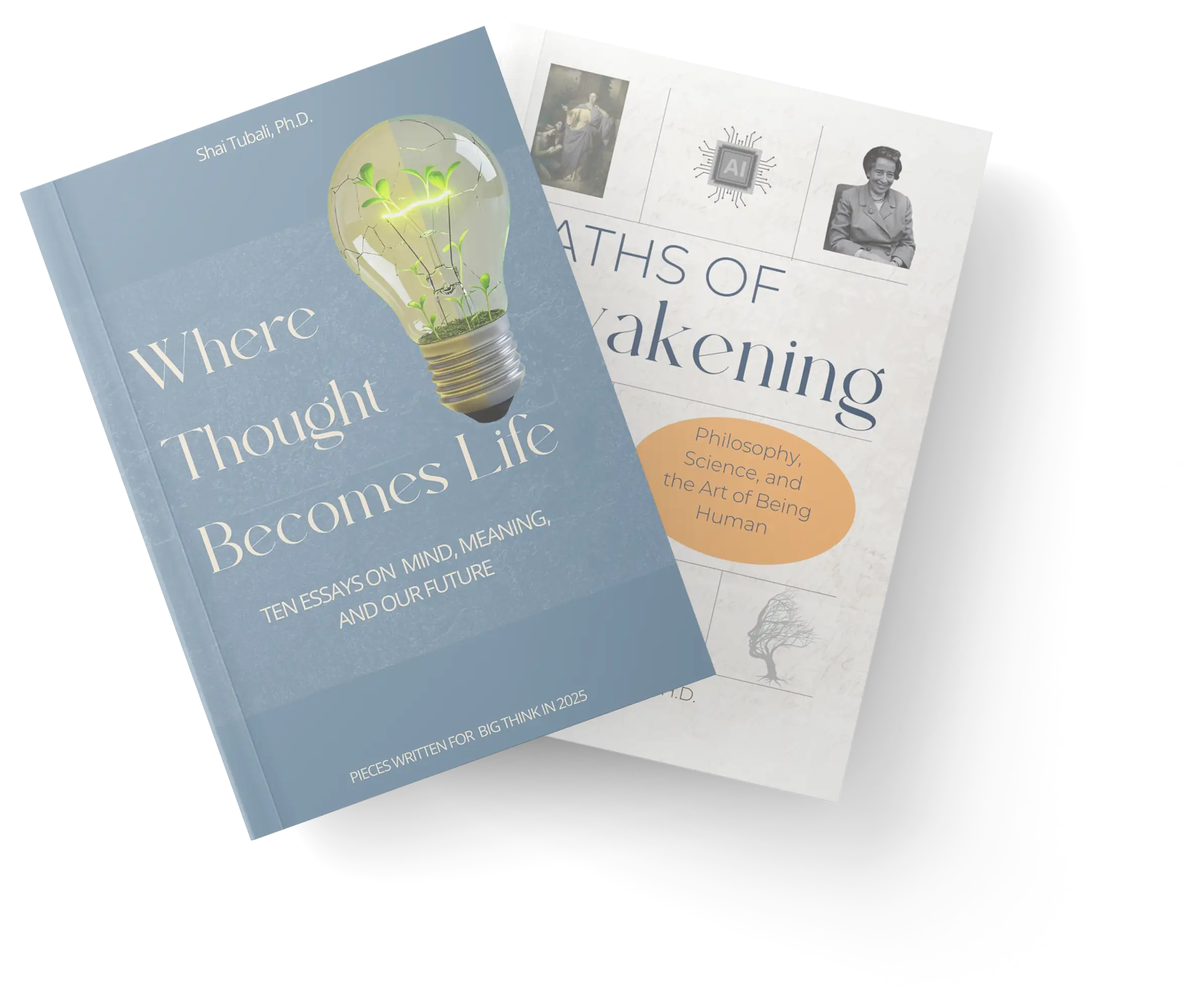
My books
My academic and research
work is
The Big Think
series is
Meaning and depth in an artificial age
A twice-monthly letter on philosophy, consciousness, AI, education, and the practices through which human capacities are cultivated.
New essays, selected readings, and occasional invitations to live work.